
The Alhambra
Under a cloudless cerulean sky, the Alhambra crouches, starkly beautiful, menacing yet beguiling. The Sierra Nevada dusted white with snow, loom behind, impenetrable and timeless. The dense green mantle of the lower hills enfolds the mysterious palace fortress, warning those who venture to Granada that the earth’s embrace itself defends the Alhambra. In the gentle but insistent breezes, the eternal sighs of Boabdil whisper his despair.
The Alhambra Palace in Granada, Spain, a UNESCO World Heritage site, endures as one of the most interesting and magnificent cultural treasures in the world. The Alhambra, or Qal’at al Hamra, described by the Moors who constructed and expanded it over some seven hundred years, as a “pearl set in emeralds” and “paradise on earth,” amazes visitors with its rich history, art, architecture and fantastic stories of intrigue, forbidden love, vengeance, and magic that rival A Thousand and One Nights.
The red fortress, originally constructed in 889 on the strategic high ground overlooking Granada, was built atop ancient strongholds stretching back beyond the Romans to control the vantage point above Spain’s Darro River. Muslims conquered Granada in 711 and controlled the region in southern Andalucia until Boabdil’s defeat in 1492. The Sultans of the Nasrid Dynasty added elaborate palaces and gardens, sheltered in the bosom of the Sabikah Hill behind the original Alhambra fortress, starting in 1238. The personal and private retreat of the Sultans and their families, the palaces and gardens of the Generalife, or “gardens of lofty paradise,” deriving from Yannat al Arif, were largely created in the 14th century, at the height of the powerful Nasrid dynasty.
In addition to the beautiful examples of Moorish architecture, lovely arabesques, calligraphy and muquarnas wrought in various woods, stone and tile, Christian sovereigns also contributed to the Alhambra’s remarkable assortment of architecture, revealing centuries and cultures long vanished. The Palace of Charles V, Holy Roman Emperor, was begun in 1527 and designed in the “Roman” style with an immense colonnaded circle at its center. St. Mary’s Church, begun in 1581 and completed nearly forty years later, was constructed in the Renaissance style on the site of the Alhambra’s Grand Mosque and renowned for its Baroque altar.
Roses grow everywhere at the Alhambra, gardens burst with an excess of color, top heavy rose trees line walkways, and heavy arches of roses adorn doorways. Cedar, cypress, orange, myrtle, English elms and neatly trimmed hedges weave throughout the complex. Wandering through the intricate labyrinths of gardens, reflecting pools, fountains, massive doorways, open air courtyards, even a water stairway, visitors come to understand Boabdil’s desolation when he ceded the Alhambra to the Catholic monarchs, Ferdinand and Isabella, and ended the Moorish rule in Spain.
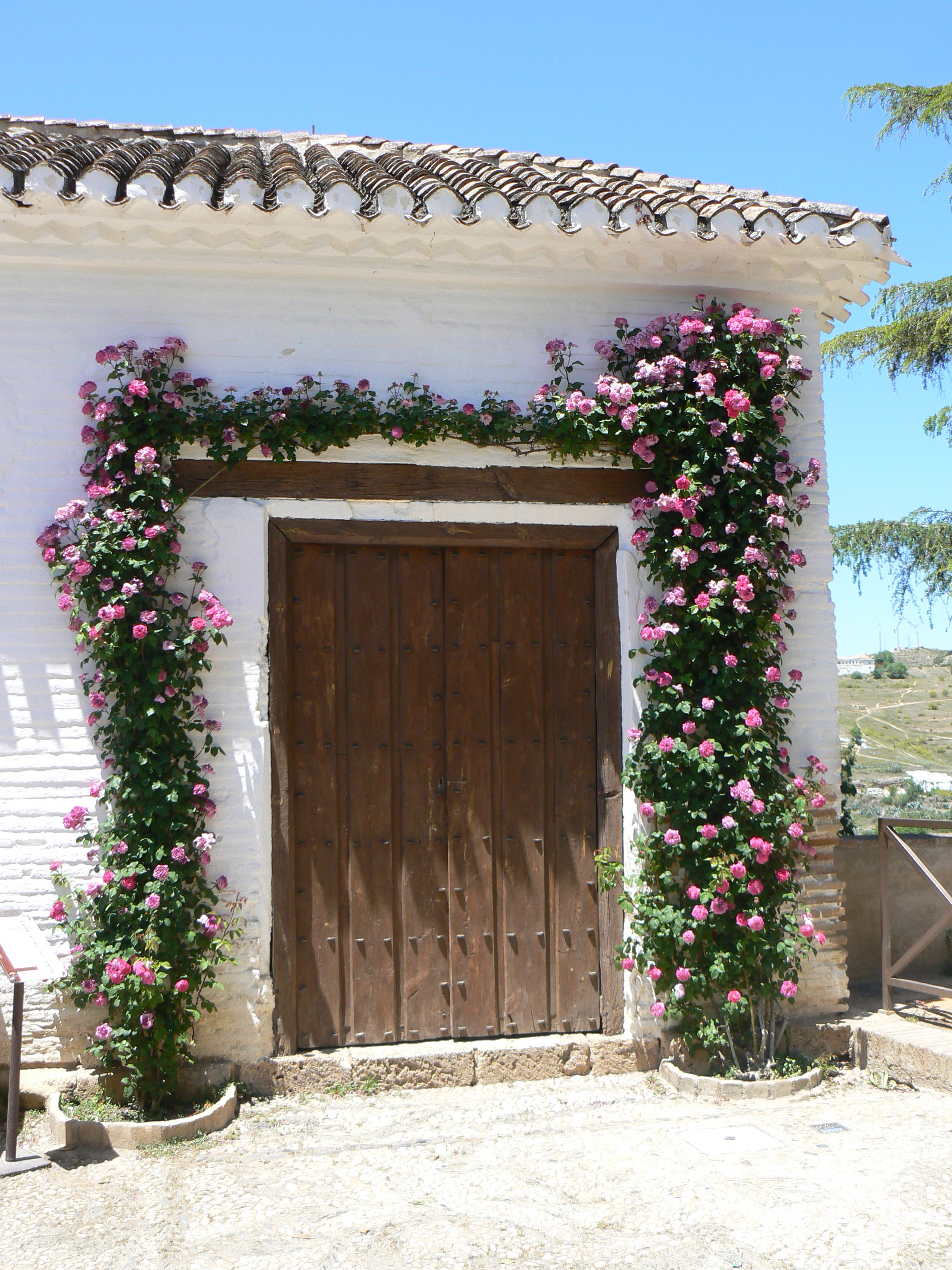
Visitors helplessly surrender to the Alhambra’s delights, and for a few hours, eagerly disappear into another world. All who enter seek the enchanted soldier said to perpetually roam among the Alhambra’s thirteen towers. The dark legend of murder and betrayal will ever haunt the Hall of the Abencerrages. Visitors easily imagine Christopher Columbus in the soaring Hall of the Ambassadors, petitioning King Ferdinand and Queen Isabella to fund his voyage across the Atlantic Ocean. Tales of secret lovers and their trysts charm all who stroll through the romantic Sutana’s garden in the Generalife.
The legend of Boabdil’s tears is forever rekindled in all who gaze back at the Alhambra as they reluctantly disentangle themselves from its spell. Abu Abdullah, Mohammad XII, the 22nd and last Nasrid Sultan to rule in Granada, known as Boabdil, wept as he rode away into exile from Granada and was reproached by his mother, “crying like a woman is why you cannot defend yourself like a man.” And so Boabdil, in despondency and anguish, looked back at his beloved Alhambra, and sighed.
http://www.alhambra-patronato.es/index.php/Bienvenido/1+M5d637b1e38d/0/
http://www.donquijote.org/culture/spain/history/legendsgranada.asp
 The Scribbling Hound